
In its 2018-19 fiscal year, the Oregon Wine Board of Directors granted $437,500 to researchers for nine projects with the potential to advance quality grape growing and winemaking in Oregon. The update below is part of a series to let you know about the status of these projects.
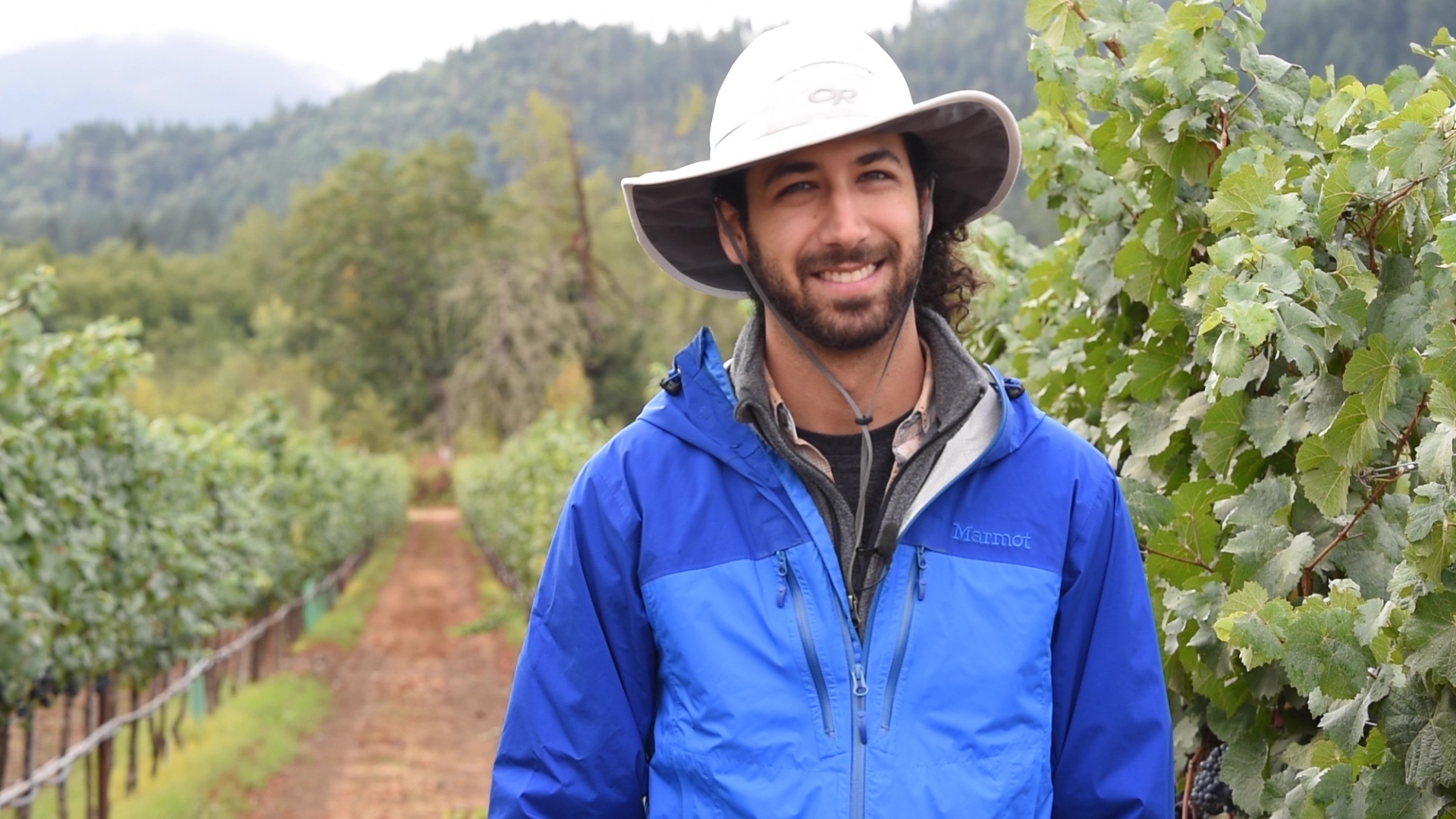 Dr. Alexander Levin is a viticulturist at the Southern Oregon Research and Extension Center, an assistant professor in the Department of Horticulture at Oregon State University, and a core faculty member of the Oregon Wine Research Institute. He has prepared the update below for this project, which he leads with co-PI Achala KC, assistant professor in OSU’s Department of Plant Pathology. This project also receives funding from the Oregon Department of Agriculture, Rogue Valley Winegrowers Association, OWRI and the Agricultural Research Foundation.
Dr. Levin can be reached by email or phone at 541-772-5165 x223
Keeping Them Fed and Happy: Mitigating Negative Effects of Grapevine Red Blotch Disease through Cultural Practices
Project objectives:
The overall objective for this two-year project is to address vineyard management concerns by evaluating vine response to cultural practices in grapevine red blotch disease-afflicted vineyards. Specifically, project objectives are to:
- Conduct on-farm field trials in collaboration with growers to determine best viticultural practices for the mitigation of grapevine red blotch disease (GRBD) in relation to wine grape production and fruit quality;
- Determine the effects of mitigation practices on quality and sensory characteristics of wines made from GRBV-infected fruit.
Why it’s important to the Oregon wine community:
While entomological and viral research continues, Oregon’s wine grape growers desperately need more viticultural information on how to successfully farm GRBV-infected blocks in the interim period.
What progress has made thus far:
Experimental design and disease testing. Two experiments were established in adjacent, irrigated Pinot noir blocks. In the first experiment, control vines were compared to vines receiving supplemental irrigation, supplemental fertilizer, or both. In the second experiment, control vines were compared to vines receiving supplemental irrigation, supplemental crop thinning, or both. In addition, the second experiment was conducted over two rootstocks (101-14 and Riparia Gloire). All supplemental irrigation and fertilizer application rates were twice the grower control. Supplemental crop thinning was thinning to one cluster per shoot, while control vines were not thinned. Treatments were replicated four times in each experiment. Polymerase chain reaction (PCR) testing revealed that 95% of the vines were GRBV+. Therefore, data was collected from GRBV+ vines only.
Treatment imposition. In supplemental irrigation treatments, a second drip line was installed (in each experiment). Control irrigation treatments received 259 L/vine, while supplemental treatments received twice that level, or 518 L/vine. Supplemental fertilization treatments applied through the drip system were imposed in specified plots by keeping drip line valves open during application for double the amount of time designated for the grower control fertilization treatments. Cumulative applied amounts of nitrogen, phosphorus, and potassium in control treatments were 12.9, 1.2, and 11.1 kg/ha, respectively, and supplemental treatments received twice the aforementioned amounts. In thinning plots, crop level was adjusted just after berry set.
Preliminary results. Disease severity at harvest was significantly reduced (10-19%) with supplemental irrigation in both experiments. In contrast, it was unaffected by supplemental fertilization or crop thinning, and there were no significant interactions among treatments. Notably, vines on both rootstocks responded similarly to irrigation and thinning treatments. There were no significant treatment effects on total soluble solids (TSS; oBrix) in either experiment, though in some cases, TSS trended lower with supplemental irrigation and higher with thinning. In contrast, juice pH was more strongly affected by treatments. Juice pH was significantly higher in vines receiving supplemental fertilization and in thinned vines. Juice pH trended lower with supplemental irrigation, but this effect was not significant, nor consistent across experiments/treatments.
Next steps:
At this point it is too early to determine whether the cultural practices tested herein could be used to successfully mitigate GRBD in vineyards. It appears that, at the very least, increasing irrigation could reduce disease severity from a foliar symptom perspective. However, whether or not this makes a difference from a fruit quality perspective remains an open question – given that some 2018 data has yet to be analyzed and wines yet to be tasted.
It is possible that the outcomes of this study reveal that negative symptoms of GRBD cannot be mitigated with cultural practices. While this would be a disappointing outcome, it would narrow the focus of future GRBD management strategies. At the same time, the carryover effect of management practices on vine health (healthy canopy and less disease severity) and response to the GRBV and subsequent outcomes on fruit quality in following years have yet to be investigated.