
A series of in-depth, hour-long, confidential interviews were conducted among leading Portland restaurant wine directors and sommeliers by Lisa Prince, Wieden+Kennedy brand strategy expert, in late 2014. The interviewees were chosen to represent lists with a range of Oregon wine representation. Prince was recruited by the OWB to help the Oregon wine industry better understand:
- Why Oregon wine appears to not get its “fair share” of wine lists at high-profile restaurants in Portland;
- The attitudes and motivations of on-premise wine buyers in Oregon and what influences them as they build their wine lists;
- How the Oregon wine industry can better position Oregon wine to this audience.
All italicized words below reflect direct quotes from the respondents.
Topline Insights
- Oregon wine is well respected for its high quality. The industry is viewed as inspiring, progressive and collaborative.
- The beauty of wine as a whole is its diversity and the intellectual curiosity it satisfies. Therefore there is a limit to the presence any one region will capture on a well-constructed list.
- Wineries and sales reps need to approach each account with intention and know how the wine they’re selling fits the restaurant’s needs or fills a gap on its list.
- Relationships are critical in earning placements and getting wines on a list to sell – develop them not only with the buyer, but with the staff and the distributor rep who is selling your wine.
- Have a compelling story, one that distinguishes your brand and can easily be retold by everyone who touches your wine – from the distributor to the buyer to the servers to the restaurant’s customers.
Key Takeaways
Perceptions of Oregon Wine
This audience has very positive perceptions of Oregon Wine.
“People feel at home to experiment in Oregon.”
“It’s quintessentially Oregon when it feels like a fun art project with a summer camp vibe.”
“I love the innovativeness of Oregon wine; I love hearing about the curious intellectuals who don’t come from wine-making royalty.”
Building an Oregon Restaurant Wine List
“You can’t ignore the bounty outside your front door.”
Insights and guidelines followed for developing a “local” wine list:
- Local ≠ Oregon. At a minimum, Local = Oregon + Washington. Sometimes “Local” = West Coast.
“I have a kinship with Washington and California, as well as Oregon. I like to support the West Coast.”
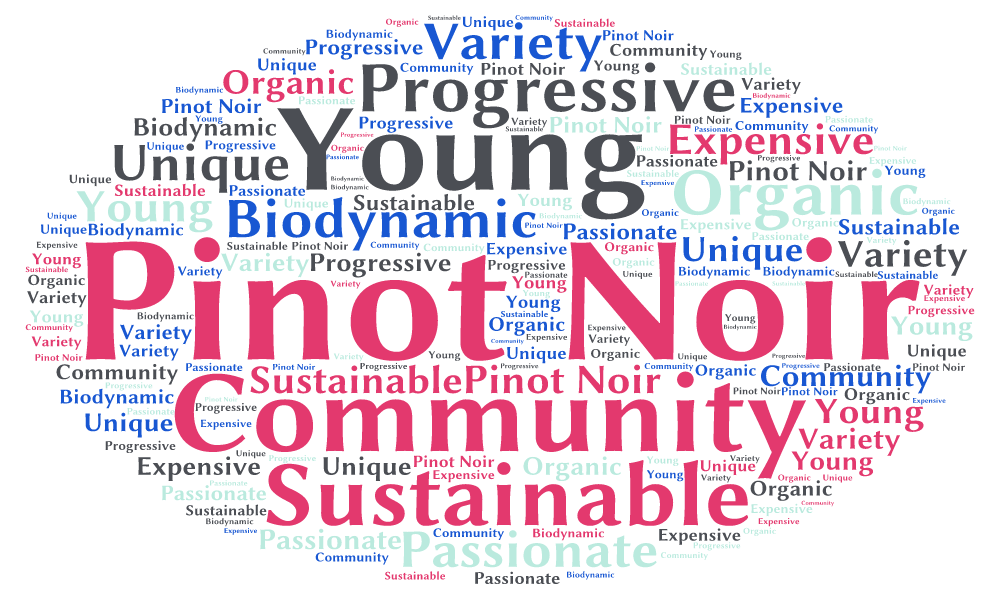
- Oregon wine has very positive connotations: young, entrepreneurial, collaborative, exciting, experimental, innovative. Also expensive, but not prohibitively so.
- The restaurant concept frequently drives the wine list. Restaurants in Oregon MUST have Oregon wine on the list, but even lists at restaurants with a Pacific Northwest cuisine concept still only merit 25-30% Oregon on the list (unless the chef demands otherwise, which is unusual).
“We are very focused on using local ingredients … it’s important to showcase a lot of local wine first and foremost. 25% of our list is strictly Oregon and that would be the highest percentage we would ever do of one region.”
- This glass ceiling for Oregon wine placements is because the overall appeal and intrigue of wine is its worldliness.
“Wine has to stimulate the intellect as well as the senses.”
- Being stuck in one region of the wine world is the equivalent of giving an artist only two colors to paint with.
“Wine is all about diversity. You would be missing out on so much of the world if you focused on one region.”
A few other factors that go into building a list:
The three most important factors in construction of a wine bottle list are:
- Fit with the concept of the restaurant
- A good spread of all the permutations: price points, regions, varieties
- Good value for money
“A good list should have variety that makes sense. Different wine at different price points and different varietals.”
“Variety and value at a good price. It’s almost a little bit like putting a baseball team together … are you getting more value than [expected] at out of each wine at its price point.”
The two most important factors for a by-the-glass wine list are:
- Price below $15 per glass
- Balance of experimental and predictable: surprise and old faithful
It’s About People, Part 1: Who Influences the Placement?
Unless the restaurant is the chef’s “baby,” the wine buyer has complete control over the wine list and does not have to confer with other people about it. However, there are others who influence their decisions.
Who is really the audience?
- The wine list is written with customers’ tastes in mind, but more so for the distributors and peers who are watching and evaluating.
“You are really judged by distributors and creative peers, not customers.”
- Customers who drive demand for Oregon are frequently out-of-towners; locals like to experiment more (and, as a hypothesis, perhaps they drink a lot of Oregon wine at home, purchased from tasting rooms or local retailers).
Who makes or breaks the placement?
- A distributor rep can make or break a listing. A good rep knows the brand story, knows the restaurant concept and marries the two together – and is overall a good person. A bad one shows up without having done his homework and presents the same selection everywhere.
“I want them to have done their homework. Looked at my list. Got to know what I like. Don’t pull out of their bag something I am not going to be interested in.”
- Personal experiences with winery owners/winemakers are gold. It makes the wine director feel special, puts a face to the name, excites the staff and helps SELL the wine.
“I love to meet the winemakers directly and have lovely experience at the winery.”
- Augment this relationship by stopping in for a drink or lunch.
“I appreciate seeing people from the winery. Especially when they spend a dollar or two in the restaurant.”
It’s About People, Part 2: Who Influences the Sale?
“I rely on the servers to actually sell the wine and when they get passionate about a wine it will sell in a week.”
- Servers are the people most often selling the wine to the customer and therefore they are critical to getting the wines on the list to sell.
- They want to provide a good experience (and get tips!). They frequently have stories from five or so wines on the list in their back pockets to sound informed and make the sale.
“The servers love stories they can relate to, when they can have a vivid memory of that wine. They will always choose to talk with a customer about a wine that has a personal story.”
“I can’t always afford for the staff to try all the wine, but I can always afford to give them a good story about the wine.”
- While servers might be passionate about wine, they don’t know as much as the buyer. They are eager to be educated.
“Staff training is huge as servers are selling the wine most often.”
- What gets servers excited about wine? First, that it tastes good. Second, that it has a great story that makes for good tableside conversation. And, that they can picture the grower, maker or land.
“When the servers get excited about wine it sells like hotcakes.”
- Local wineries have a natural advantage here – they are present, can connect a face with a story, and even if they don’t make the personal connection, their stories are more relatable / easily imagined.
“I’m a sucker for a good story, especially a story about an upstart. I’ve never met a winemaker who is dull or boring.”
“Show me the passion of the person who is making the wine. I have to excite a lot of people – the staff and the customer.”